Welcome Back: Building on the Personal
In our previous blog, we explored the personal benefits of Irish Freemasonry—how membership transforms individuals through moral teaching, brotherhood, and skill development. We established that Freemasonry isn’t some shadowy conspiracy (disappointing, I know) but rather a fraternal organisation dedicated to making good men better.
Now, let’s broaden our perspective. Because whilst personal development is marvellous, Irish Freemasonry’s true significance lies in its collective impact: the charitable work that changes lives, the leadership it develops, the historical legacy it has built, and the remarkable individuals it has counted among its members.
The Grand Lodge of Ireland, the second most senior Grand Lodge in the world with approximately 19,000 members globally, has been quietly shaping Ireland and the world since 1725. Three centuries of continuous tradition—that’s rather something, isn’t it? Let’s explore what that legacy means.
Irish Masonic Charity and Community Service: Putting Principles into Practice
Historic Irish Charitable Foundations
Now we come to perhaps the most visible expression of Masonic values: charity. And Irish Freemasons have a particularly distinguished history in this regard.
The Masonic Female Orphan School was founded in 1792 to educate the daughters of deceased Freemason, a time when educational opportunities for girls were virtually non-existent. This wasn’t just charity; it was social progress. Think about it: in the late 18th century, when most girls were expected to learn needlework and not much else, Irish Freemasons were providing comprehensive education to orphaned daughters. Revolutionary, really.
The school was so successful that it was followed by the Masonic Orphan Boys’ School in 1867. These weren’t token efforts or temporary enthusiasms; they were substantial, ongoing commitments backed by consistent funding and genuine care.
By 1881, a brand new school building had opened on the Merrion Road in Dublin. (It’s now the Jurys Ballsbridge Hotel, which has carefully preserved the Masonic architectural details—the Royal Arch window, the tiled floors. Do pop by if you’re in the area. Have a pint and admire the Victorian Gothic splendour.)
Beyond the major institutions, provincial initiatives like the Belfast Masonic Charity and Widows’ Funds and the Down Masonic Widows’ Fund demonstrated how local lodges could address community needs. This wasn’t centralised bureaucracy dictating from Dublin; it was local lodges identifying local needs and responding with local solutions. Quite sensible, really.
Current Irish Masonic Charities
Modern Irish Freemasonry maintains several major charitable foundations, continuing the tradition established over two centuries ago.
The Freemasons of Ireland Girls & Boys Fund carries on the work of supporting young people’s education and welfare. The Freemasons of Ireland Victoria Jubilee Benevolent & Welfare Fund provides assistance to Freemasons and their families in times of need—illness, unexpected hardship, the sorts of crises that can devastate a family. Masonic Havens offers care and support services, recognising that charity isn’t just about writing cheques; it’s about providing practical help when it’s needed most.
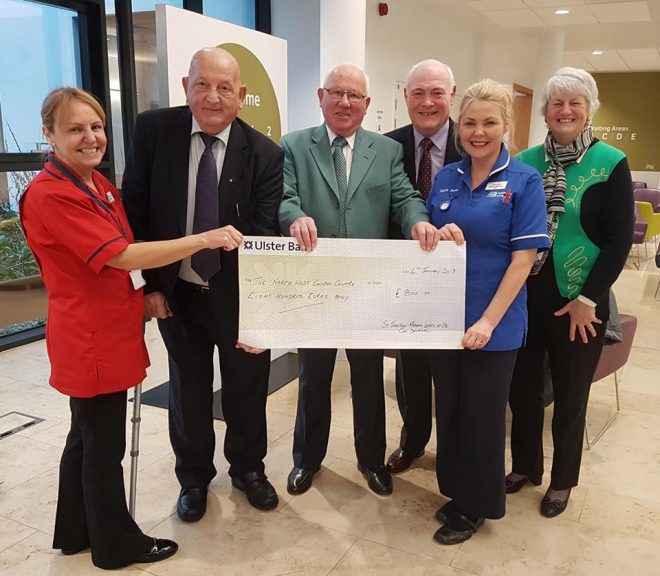
Charitable giving is a major part of membership, with members engaging in benevolence through various means, from simple gestures like gift-giving to organised fundraising for various causes. What I particularly admire is that Irish Freemasons never ask the general public for money. All charitable funds come from the members themselves. No street collections, no guilt-inducing television appeals, no clipboards in shopping centres. Just quiet, consistent giving from members who believe in supporting their communities.
Community Impact Across Ireland
The beauty of Masonic charity is its combination of scale and personal touch. Individual lodges support local causes—the community centre needing a new roof, the youth football club requiring equipment, the family facing unexpected hardship. These aren’t headline-grabbing donations, but they make a real difference in people’s lives.
Meanwhile, the collective efforts of Irish Freemasonry support larger projects. And it’s all done quietly, without fanfare or demands for recognition. (Though I am writing about it now, which rather undermines that point. But you take my meaning.)
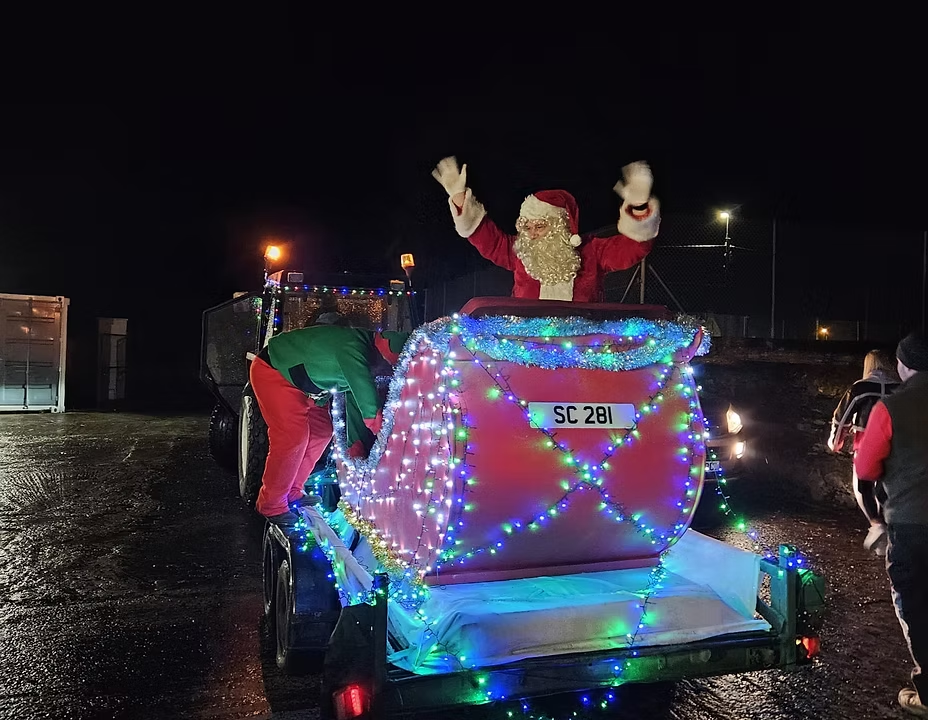
The Friday coffee mornings in Munster, with proceeds going to charity. The annual fundraising dinners. The collection at every lodge meeting. It adds up, year after year, decade after decade, century after century. It’s the compound interest of charity, if you will—small, consistent contributions creating substantial long-term impact.
Leadership Development in Irish Lodges: Learning by Doing
Structured Progression Through the Chairs
One of the cleverest aspects of Freemasonry is how it develops leadership through practical experience rather than theoretical instruction. The lodge structure provides a natural progression through various offices, each with its own responsibilities and lessons.
You might start as a Steward, learning the basics of hospitality and making candidates feel comfortable. Rather important, that—a nervous candidate isn’t going to absorb the lessons being taught. Progress to Junior Deacon, mastering the floor work and learning everyone’s names (harder than it sounds when your lodge has fifty members). Move to Junior Warden, taking responsibility for the brethren at refreshment—that’s the meal after the meeting, which is quite important, as any Irishman will tell you. Food and fellowship go hand in hand.
Eventually, you might become Senior Warden and then Worshipful Master, the presiding officer of your lodge for a year. Each position provides specific lessons—from making candidates comfortable to ensuring the lodge is ready for meetings and investigating visitors.
It’s experiential learning at its best. You can read a dozen books on leadership (and you should—they’re splendid), but there’s no substitute for actually doing it, with the support and guidance of experienced brethren who’ve walked the same path and are happy to share their wisdom.
Leadership Qualities Rooted in Irish Masonic Tradition
Irish Freemasonry cultivates leadership through the virtues of integrity, compassion, and respect, united with a commitment to continuous learning and social responsibility. These aren’t just buzzwords trotted out in mission statements; they’re the foundation of ethical leadership, practised consistently in every lodge meeting.
Integrity means doing the right thing even when no one’s watching—returning the extra change, keeping your word, admitting mistakes. Compassion means considering the impact of your decisions on others—not just the bottom line or the efficiency metrics, but the actual human beings affected. Respect means valuing every person’s contribution, whether they’re the Grand Master or the newest initiate.
What I find particularly valuable is the emphasis on servant leadership—the idea that a leader’s primary role is to serve those they lead. The Worshipful Master isn’t a boss who issues commands from on high; he’s a facilitator who ensures the lodge runs smoothly and every member feels valued. It’s leadership as service, which is rather refreshing in our age of celebrity CEOs and political grandstanding.
Practical Application Beyond the Lodge
The leadership skills you develop in Freemasonry are immediately transferable to every other aspect of life. That ability to chair a meeting effectively? Useful in your professional life. The skill of managing diverse personalities diplomatically? Invaluable in any workplace. The experience of public speaking without trembling like a leaf? Priceless.
Moreover, you’re building these skills in a supportive environment where mistakes are expected and learning is encouraged. It’s rather like having a leadership laboratory where you can experiment, fail, learn, and improve without the high stakes of your actual career. Made a hash of chairing a meeting? Your brethren will gently tell you afterwards what went wrong and how to improve. Try, fail, learn, improve—it’s the cycle of mastery.
Irish Masonic History and Notable Members: Standing on the Shoulders of Giants
Ireland’s Rich Masonic Heritage
The history of Irish Freemasonry is absolutely fascinating, and I could bore you for hours about it (don’t tempt me). There’s evidence of Masonic activity dating back to 1688 in Trinity College Dublin, which means Freemasonry was flourishing in Ireland before the Grand Lodges in London or Edinburgh were formally established. We were ahead of the curve, as usual.
In the 19th century, the 3rd Duke of Leinster served as Grand Master for an impressive sixty-one years , which must be some sort of record. Imagine the number of meetings he had to attend. The poor fellow must have known the ritual backwards, forwards, and sideways by the time he finished.
But here’s where it gets particularly interesting: Irish Freemasons established a rival Grand Lodge in England (called the Antients) with Irish regulations forming the basis of their structure. The story behind this involves Laurence Dermott, an Irish Freemason who moved to London and found the English Grand Lodge rather too stuffy and innovation-prone for his liking. So he helped establish a rival Grand Lodge based on Irish traditions and practices.
When the two rival English Grand Lodges finally merged in 1813, it was the Irish-influenced ritual of the Antients that prevailed. So Irish Freemasonry didn’t just influence Ireland; it fundamentally shaped English Freemasonry as well. (Don’t let the English forget it.)
Distinguished Irish Freemasons: A Rather Impressive List
Ireland has produced some genuinely extraordinary Freemasons. Let me introduce you to a few:
Edmund Burke (1729-1797), the author, orator, political theorist, and philosopher, whose writings on political philosophy remain influential today. Burke’s emphasis on tradition, gradualism, and moral order rather reflects Masonic principles. His “Reflections on the Revolution in France” is still studied in universities worldwide.
Daniel O’Connell (1775-1847), Ireland’s national ‘Liberator,’ who led the campaign for Catholic Emancipation and whose political genius changed Ireland forever. Think about that for a moment—a Catholic Irish nationalist finding common cause and brotherhood in Freemasonry during a period of intense sectarian division. It speaks volumes about Freemasonry’s ability to transcend the barriers that divide society.
Oscar Wilde (1854-1900), the renowned poet and playwright , was initiated at Oxford and remained a Freemason during his years of literary triumph. One rather likes to imagine Wilde’s wit enlivening lodge meetings. (“Work is the curse of the drinking classes,” he famously quipped—though probably not during a Masonic lecture.)
William Butler Yeats (1867-1939), the Nobel Prize-winning poet, whose mystical interests aligned well with Masonic symbolism and tradition. His poetry often explores themes of transformation and spiritual seeking that resonate with Masonic teaching.
Sir Ernest Shackleton (1874-1922), the legendary Antarctic explorer, whose leadership during the Endurance expedition remains a masterclass in crisis management. When his ship was crushed by ice and he had to keep his entire crew alive in the most hostile environment on Earth, his Masonic training in leadership and brotherhood undoubtedly served him well.
Arthur Wellesley, 1st Duke of Wellington (1769-1852), born in Dublin (though he later claimed “being born in a stable doesn’t make one a horse”), who defeated Napoleon at Waterloo and later served as Prime Minister.
More recently, William Joseph ‘Joey’ Dunlop, the legendary motorcycle racer and humanitarian, exemplified Masonic values through both his racing achievements and his extraordinary humanitarian work. He travelled to the Balkans during the wars, risking his life to deliver aid to those in need. That’s Masonic charity in action—not just writing a cheque, but personally going into danger to help others.
Thomas Barnardo (1845-1918), born in Dublin, founded the famous children’s homes that still bear his name. He rescued thousands of destitute children from Victorian London’s brutal streets, giving them education, care, and hope. His work continues today through Barnardo’s, one of the UK’s largest children’s charities.
The list goes on. Members of the FitzGerald dynasty, one of Ireland’s greatest families. Revolutionaries, statesmen, artists, explorers, humanitarians—all united by their membership in Irish Freemasonry.
Ireland’s Unique Contributions to Global Freemasonry
Here’s something that should make every Irish Freemason swell with pride: Irish Freemasonry spread through the British Army to colonies worldwide, meaning the form of Masonry that much of the world practised was predominantly Irish.
Because the Irish Grand Lodge was so willing to issue travelling warrants, Irish regiments established lodges wherever they were stationed. Australia, India, Canada, the Caribbean, Africa—Irish Freemasonry followed the Irish soldier and put down roots.
Even more remarkably, it was an English regiment with an Irish warrant that started the lodge from which Prince Hall Freemasonry sprang, the historically African-American branch of Freemasonry that has made tremendous contributions to civil rights and community development in America.
Ireland’s influence on global Freemasonry is simply immense, far exceeding what you might expect from a relatively small island. It’s rather like our influence on literature, music, and the invention of reasons to have a drink. We punch well above our weight.
Visiting Freemasons’ Hall, Dublin: An Architectural Gem
If you’re even slightly curious about Irish Freemasonry, do visit the headquarters on Molesworth Street. This purpose-built structure, opened in 1869, features dramatically decorated Lodge rooms, a library, museum, offices, and dining areas.
The architecture alone is worth the visit—Victorian Gothic splendour with Masonic symbolism incorporated throughout. The craftsmanship is extraordinary, from the carved woodwork to the stained-glass windows to the elaborate plasterwork on the ceilings. It’s a building that takes itself seriously, which I find rather charming in our age of glass boxes and minimalist blandness.
Public tours are available at 3 p.m. every weekday for €5 per person, and booking isn’t required Grand Lodge of Ireland | Freemason.ie. Just turn up, pay your fiver, and prepare to be impressed. The guides are knowledgeable and—this being Ireland—friendly and happy to answer questions. They won’t reveal the secrets (those are, well, secret), but they’ll tell you about the history, the architecture, the charitable work, and what Freemasonry actually is rather than what conspiracy theorists claim it is.
The museum houses an impressive collection of Masonic regalia, historical documents, and artefacts, including items dating back centuries. You’ll see beautifully crafted aprons, jewels of office, gavels, and ceremonial swords. It’s a fascinating glimpse into Ireland’s social history, regardless of whether you’re interested in joining.
The Irish Masonic Future
So there we have it: nearly three hundred years of Irish Masonic tradition, from Baal’s Bridge Square in 1507 to the present day. The Grand Lodge of Ireland stands as the second most senior Grand Lodge in the world, with a history of innovation, charity, and brotherhood that has shaped Freemasonry globally.
The charitable legacy is substantial: from 18th-century orphan schools to modern welfare funds, Irish Freemasons have consistently supported their communities through quiet, persistent generosity. The leadership development is proven: countless men have learned to lead through lodge service, taking those skills into business, politics, exploration, and humanitarian work. The historical contribution is undeniable: Irish Freemasonry spread across the globe and influenced the development of the Craft worldwide.
And do remember: we’re approaching 2025, which marks the tercentenary of the Grand Lodge of Ireland. Three hundred years of continuous tradition, three hundred years of making good men better, three hundred years of Irish Masonic influence spreading across the world. It’s rather something to celebrate, don’t you think?
Between our first blog and this one, we’ve covered the personal benefits and the broader legacy. The personal transformation through moral teaching and skill development. The global network of brothers. The charitable impact on communities. The leadership training. The remarkable history and distinguished members. It all adds up to something rather special.
If, after reading both blogs, you find yourself intrigued—if the values of integrity, respect, and charity resonate with you—then perhaps Irish Freemasonry is worth exploring. Visit Freemasons’ Hall on Molesworth Street, attend a coffee morning at your local lodge, speak with a member. See if it feels right for you.
For more information or to enquire about membership in your local lodge, visit the Grand Lodge of Ireland at freemason.ie or call into Freemasons’ Hall at 17 Molesworth Street, Dublin. You’ll be warmly welcomed—that’s the Irish way, after all.
Brotherly love, relief, and truth. Simple principles, really. But if we all practised them consistently, what a remarkably better world this would be.
And with nearly three centuries of history behind it and a tercentenary celebration ahead, Irish Freemasonry continues its quiet work of making good men better, one brother at a time.